Literacy Is Going the Way of Cursive
So I built the bridge tool.
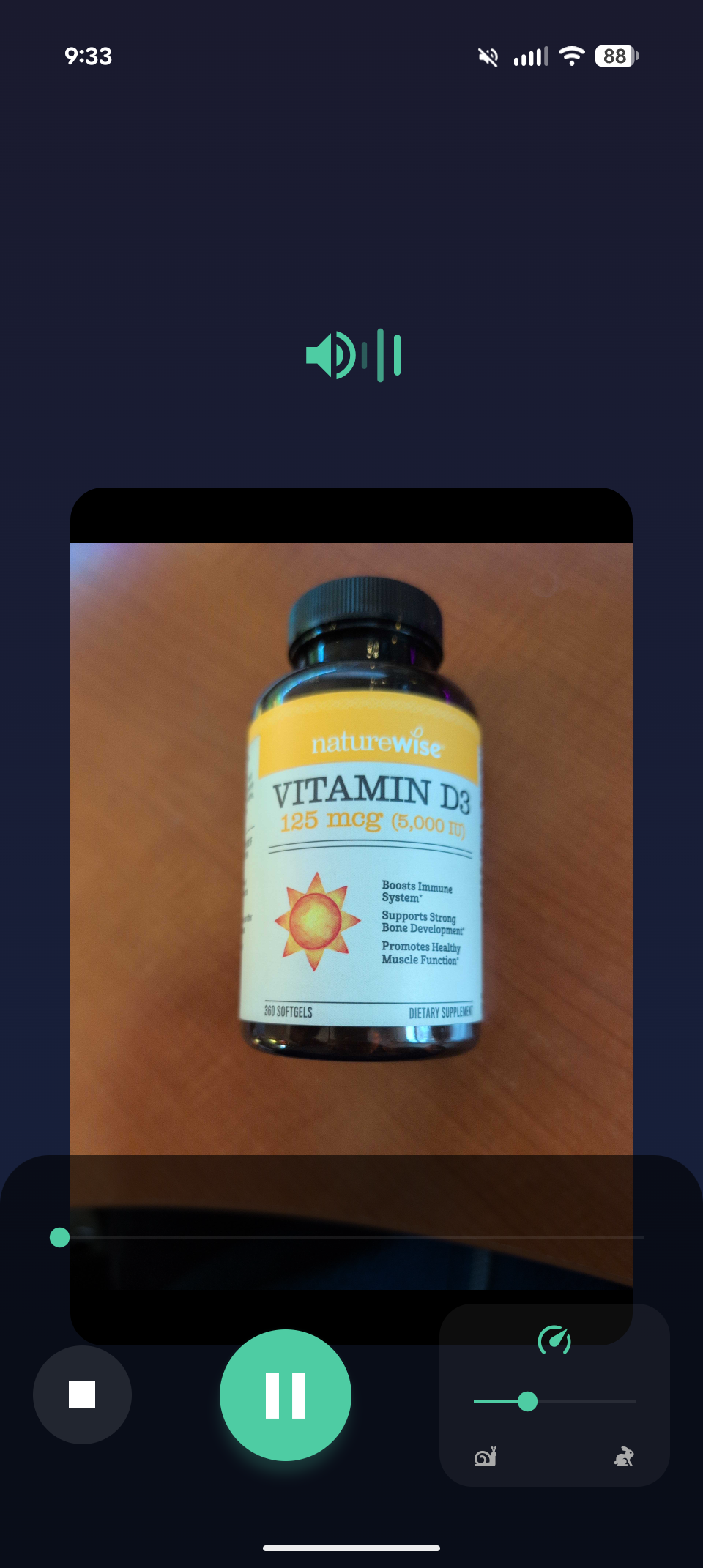
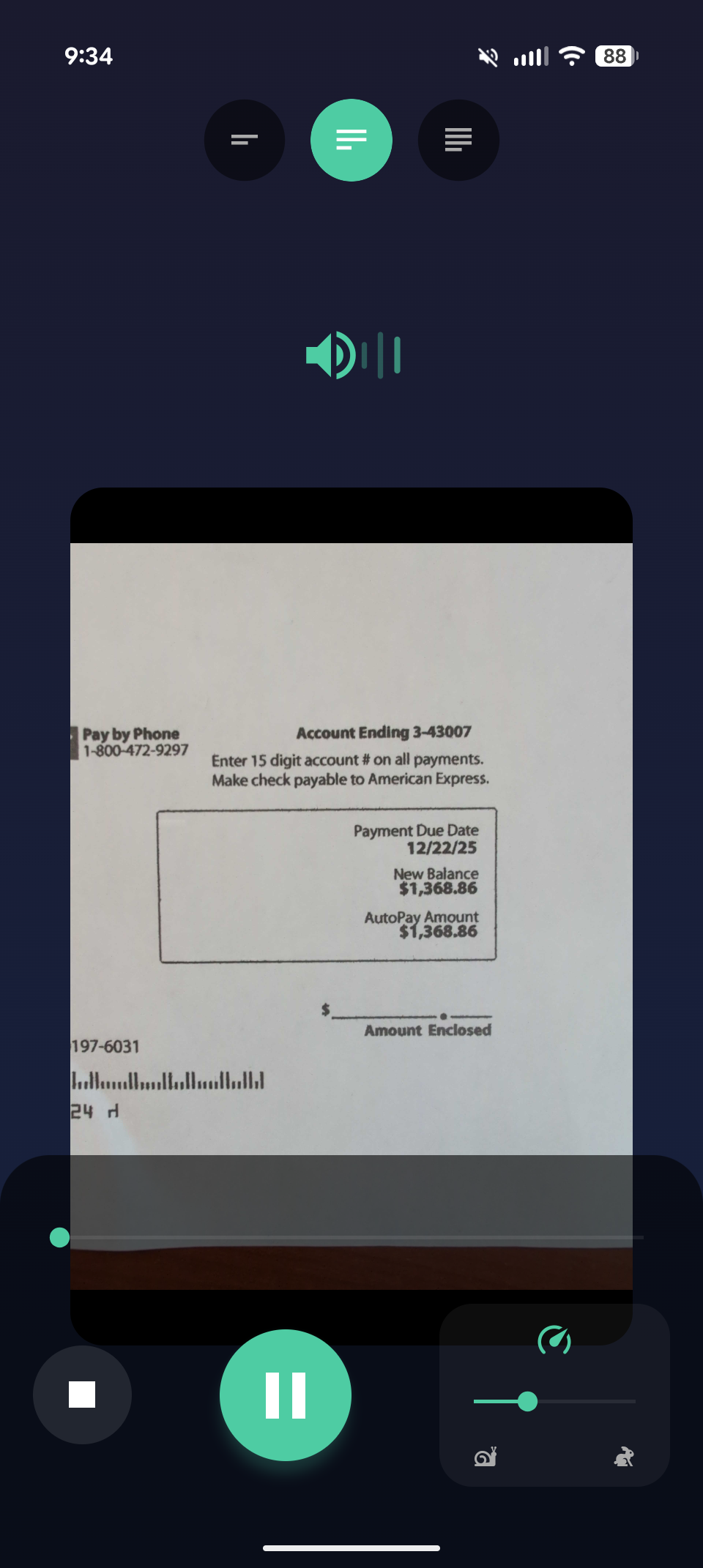
Read This For Me — point a camera at any words and hear them, four different ways, from a single photo.
Presented at AI Tinkerers St. Louis on August 19, 2026, hosted by Sketch Development Services.
View the August 2026 meetup pageLive at AI Tinkerers STL
The demo recording shown on the night — one capture, read back four different ways.


Who It Helps
54 million adults in the U.S. read below a 6th-grade level. Many navigate daily life by asking others for help, memorizing routines, or avoiding situations entirely.
Read This For Me lets people read independently and privately — no accounts, no history, no one watching. Just point at text and listen.
- *Menus at restaurants
- *Medical paperwork
- *Official letters and notices
- *Signs, labels, and mail
Why I Think It Grows
That is the user today, and it is reason enough to build this. But I do not think the problem stays this size.
Short-form video already won. An entire generation gets its instructions, its news, and its recipes without reading a paragraph.
Everything Written Is Legacy Code
When a process still requires reading — the clipboard of forms they hand you at the doctor's office — that is not a neutral design choice. That is a system written against a runtime that is being deprecated.
Everyone in this room is literate, and was raised in a literate world. That makes this sound insane. It is going to sound less insane every year.
// written English, user-facing
// status: deprecated
// shim: LLM translation
// removal: TBD
// we are the shim.
How a Skill Dies
- 1. Everyone can write cursive.
- 2. You should learn cursive because I said so.
- 3. No one can explain why we're still teaching cursive.
Now run the same three stages on reading. Stage one is where we are standing.
The App in Ten Seconds
Point
At menus, forms, mail, medicine labels, signs.
Tap
Clipboard reads every word. Brain explains it.
Listen
Natural voice, adjustable speed, nothing to read.
One Capture, Four Outputs
Read every word
Cloud Vision TEXT_DETECTION → TTS. That is the whole feature.
- No model.
- No prompt.
- No temperature.
- No hallucination surface.
Explain it to me
Cloud Vision → Gemini → TTS, in three lengths.
- Short.
- Medium.
- Long.
- All from one prompt template.
An explanation costs about 470 milliseconds and a fraction of a cent.
So you stop picking one rendering on the user's behalf. You hand them four and let them choose. Knowing which half of the product should not use the LLM is most of the design — when someone needs the exact wording of a legal notice, the trustworthy answer is the deterministic one.
There Is Exactly One Prompt
Every line of the template is fixed except one: LENGTH:. Short, medium, and long are byte-identical prompts apart from a single sentence of English.
The rules are almost entirely negative — five things not to do, one thing to do. Most of the work in this prompt is suppressing the model's instinct to be chatty at someone who is already struggling.
No maxOutputTokens. No temperature. No generationConfig anywhere in the repo. The token budget is a sentence of English.
RULES:
- Output ONLY the explanation.
- NO introductory sentences.
- NO markdown formatting.
- NO conversational filler.
- Use simple, direct sentences.
◄ only LENGTH: ever changes ►
Where the Time Actually Goes
Median warm latency, measured from 82 production log entries on 19 August 2026.
The first call of the day cost 5,135ms
One cold Vision call — 9x the warm median. Cloud Scheduler now pings the real endpoints every five minutes for about fifteen cents a month. The gotcha: a dedicated warm-up function is a separate Cloud Run container and warms nothing.
Start talking before you finish thinking
TTS runs one sentence at a time, and sentence N+1 loads while N plays. Only the first sentence blocks audio — and that sentence comes back in 228ms. The rest of the pipeline keeps working while the user is already listening.
The Key Insight
When an explanation costs half a second and a fraction of a cent, you stop choosing one rendering of a document on the reader's behalf.
- 1.Give the reader every length and let them pick
- 2.Keep the deterministic path deterministic — no model in it at all
- 3.Put the varying part of the prompt in a parameter, not a second prompt
- 4.Start speaking before the pipeline finishes thinking
Learn More
Mark Tornga | marktornga.com | AI Tinkerers STL